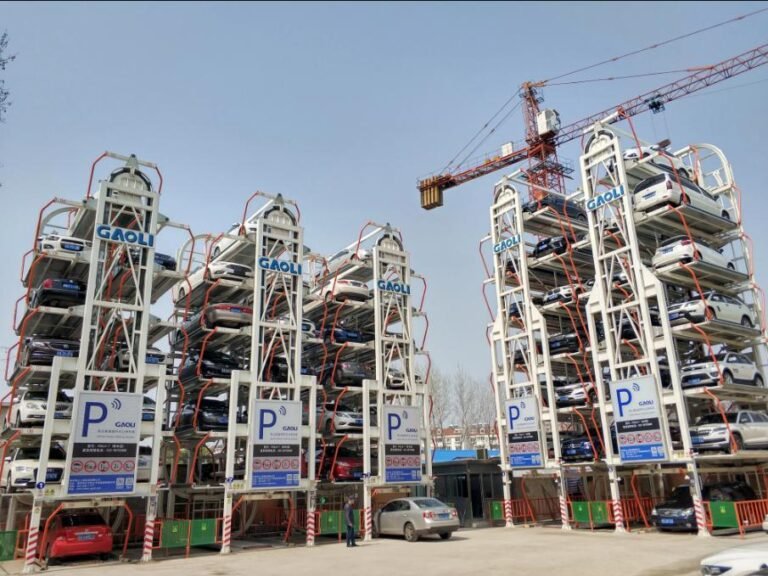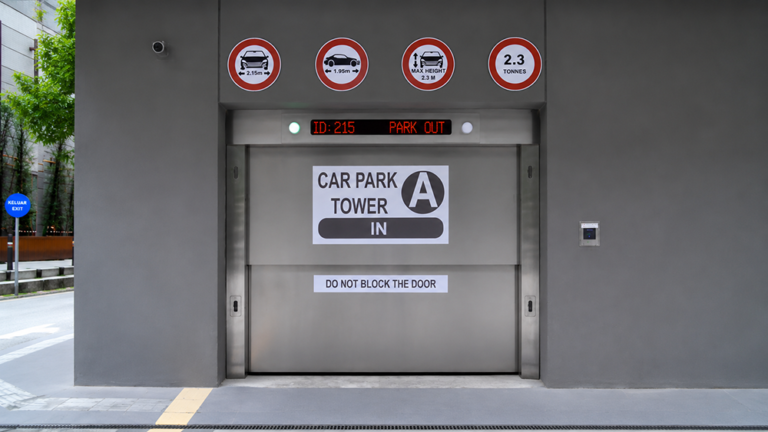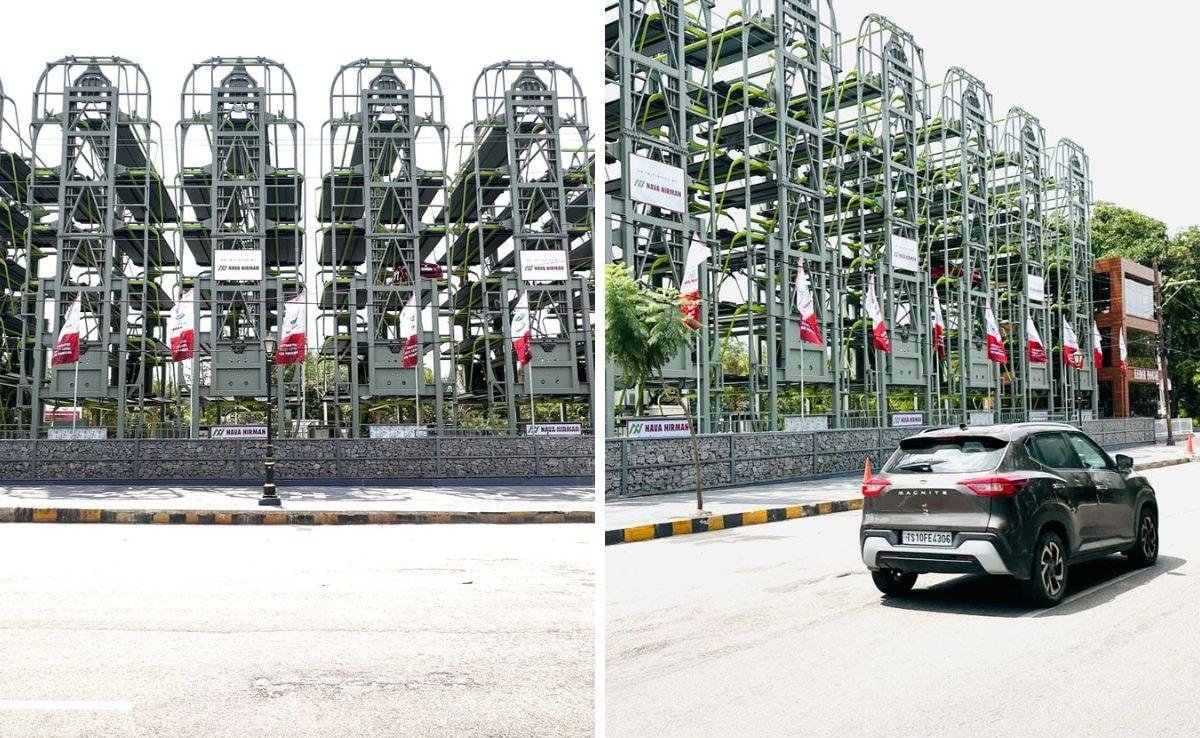
Hyderabad has taken another significant step towards smarter urban mobility with the introduction of a 72-car Smart Automated Rotary Parking Facility near Kasu Brahmananda Reddy (KBR) National Park, offering an innovative solution to parking congestion and limited urban space.
Developed under a Public-Private Partnership (PPP) model, the new parking facility occupies approximately 405 square metres of land while accommodating up to 72 vehicles through advanced mechanical parking technology.
The project demonstrates how modern cities can maximize parking capacity without requiring large conventional parking areas, making automated parking systems an increasingly attractive solution for high-density urban environments.
Smart Technology for Efficient Parking
The facility incorporates modern parking management technologies designed to improve operational efficiency, convenience, and vehicle security.
Key features include:
- 72-Car Parking Capacity: Accommodates up to 72 vehicles within a compact urban footprint.
- Space-Saving Design: Maximizes vertical parking space while reducing land requirements.
- Automated Parking Operations: Uses mechanical automation to support organized vehicle parking and retrieval.
- RFID Technology: Supports vehicle identification and streamlined parking management.
- CCTV Surveillance: Enhances security through continuous monitoring of parking operations.
- Intelligent Sensors: Help monitor vehicle positioning and support safe system operation.
- EV Charging Facilities: Supports the growing demand for electric vehicle infrastructure.
- Public-Private Partnership: Demonstrates collaboration between government authorities and private companies in developing modern urban infrastructure.
Transforming Urban Parking Infrastructure
With increasing vehicle ownership and limited land availability, conventional parking facilities are becoming less practical in many densely populated cities.
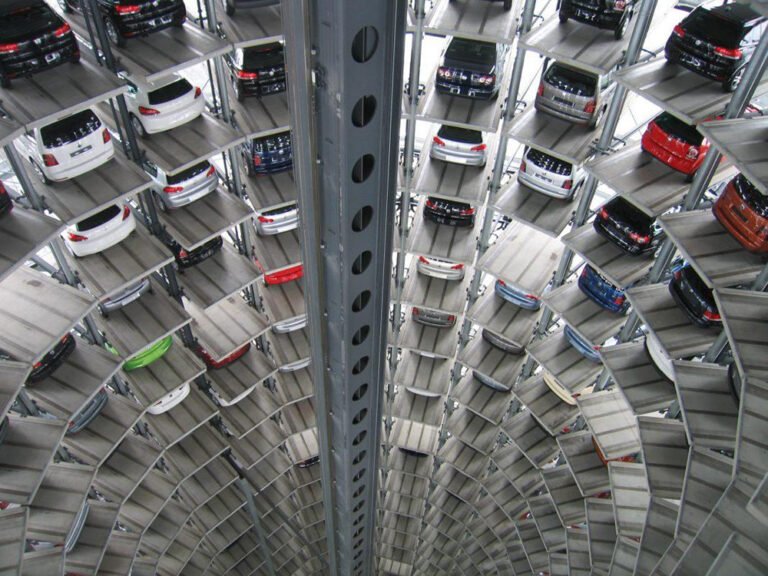
Automated mechanical parking systems offer an alternative by utilizing vertical space, improving land efficiency, and reducing the need for extensive parking infrastructure.
The KBR Park parking project highlights the potential of integrating mechanical engineering, automation, intelligent monitoring, and modern parking management technologies into urban development.
A Valuable Smart Parking Reference for Malaysia
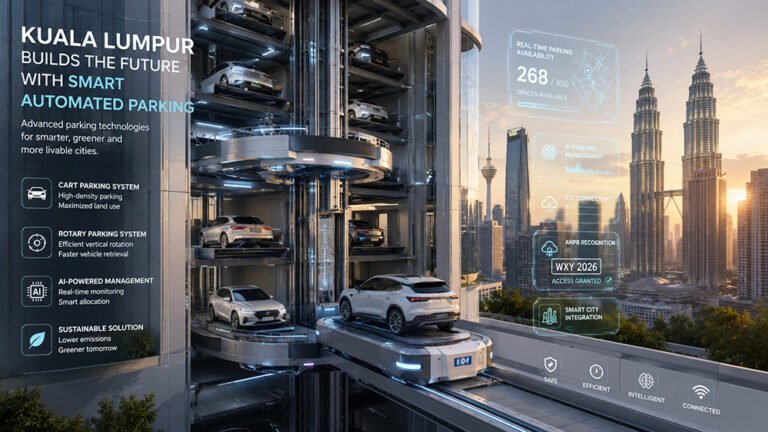
As Malaysian cities such as Kuala Lumpur, Penang, Johor Bahru, and Petaling Jaya continue to experience parking challenges, international developments like Hyderabad’s automated parking facility provide valuable insights into future parking infrastructure.
Rotary Parking Systems and other automated mechanical parking solutions may offer practical opportunities for commercial buildings, hospitals, residential developments, shopping districts, and public parking facilities where land availability is limited.
The project’s PPP development model also demonstrates how collaboration between local authorities, property developers, and private technology providers can support the implementation of innovative parking infrastructure.
The Future of Smart Parking
The successful introduction of automated parking technology in Hyderabad reflects a broader shift towards smarter, more space-efficient urban mobility solutions.
As cities continue to modernize, technologies such as Rotary Parking Systems, IoT Monitoring, RFID Access Control, Smart Sensors, and Automated Vehicle Retrieval are expected to play an increasingly important role in future parking infrastructure.
Smarter Parking. Maximum Space Efficiency. Better Urban Mobility.
Presented by SPS Smart Parking System – Malaysia
News Source: Telangana Today
Hyderabad’s First Multilevel Smart Parking Facility at KBR Park Starts Functioning