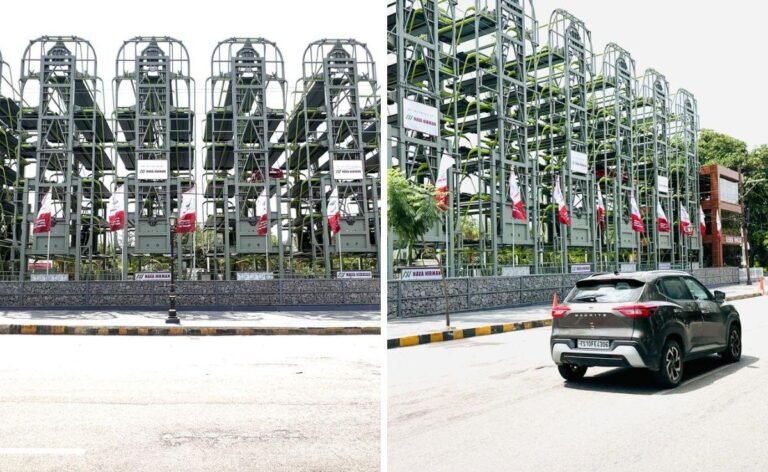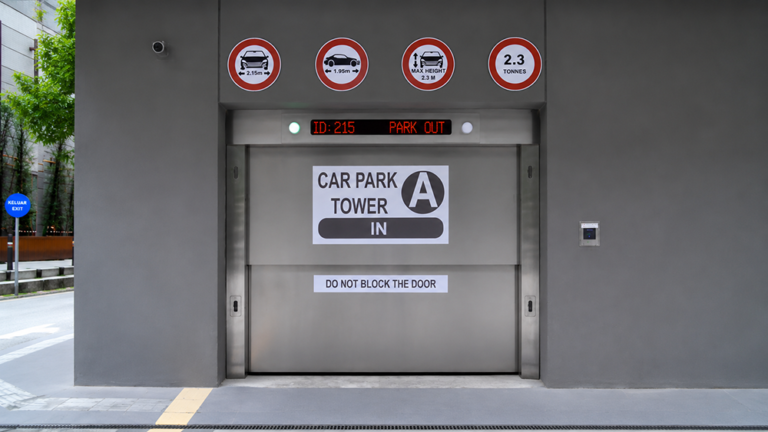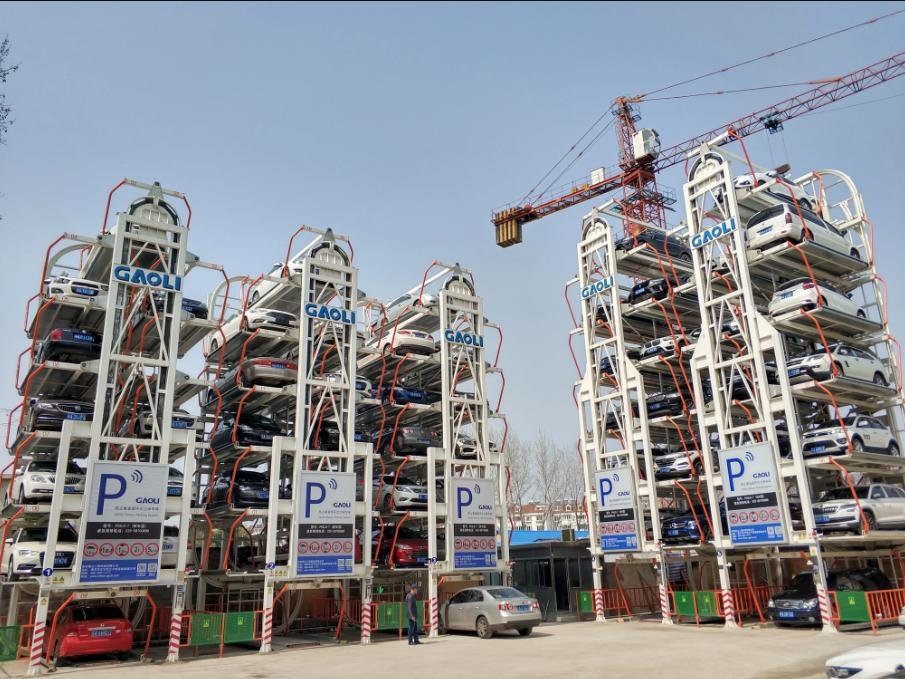
China continues to advance automated parking technology with the introduction of a large-scale Vertical Rotary Mechanical Parking System at the Daming Jingjiang industrial facility in Jiangsu Province.
The newly operational parking installation features 50 sets of mechanical parking equipment, providing a total capacity of 980 vehicles within an area of approximately 2,000 square metres.
This innovative project demonstrates how vertical rotary parking technology can significantly increase parking capacity while minimizing land requirements, offering an efficient alternative to conventional ground-level parking facilities.
Advanced Vertical Rotary Parking Technology
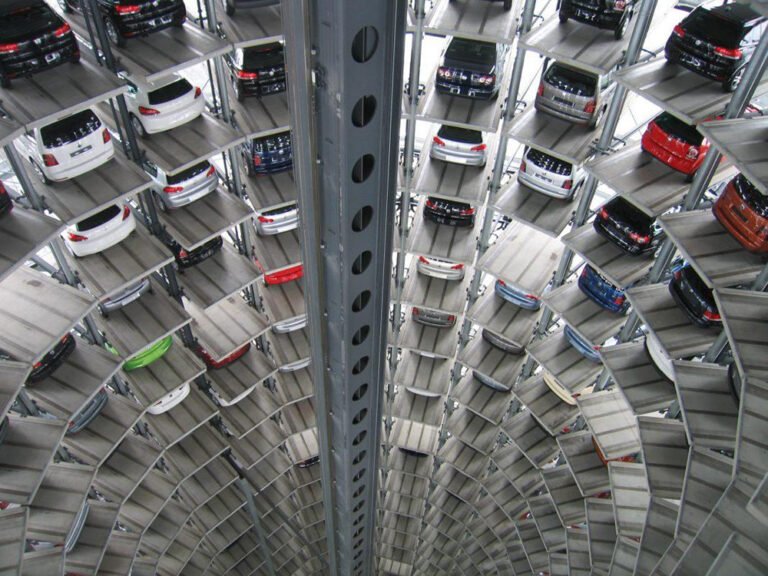
Unlike traditional parking areas that require extensive horizontal space, vertical rotary parking systems utilize automated mechanical structures to move vehicles vertically and position them within designated parking spaces.
The Jingjiang project incorporates several important technological features:
- 980 Parking Spaces: Provides large-scale vehicle storage capacity within a compact footprint.
- 50 Mechanical Parking Units: Multiple parking systems operate together to accommodate high parking demand.
- Space-Saving Infrastructure: Uses approximately 2,000 square metres of land to accommodate hundreds of vehicles.
- Bidirectional Rotary Operation: Supports clockwise and counterclockwise movement to optimize vehicle retrieval.
- Automated Vehicle Retrieval: Drivers can enter their vehicle registration numbers to initiate the retrieval process.
- Efficient Traffic Distribution: Multiple independent parking units help distribute parking demand and reduce congestion during peak periods.
- Intelligent Parking Management: Combines mechanical automation with digital controls to improve parking organization and operational efficiency.
Maximizing Urban Space Through Engineering Innovation
As cities and industrial developments continue to expand, the availability of land for conventional parking infrastructure is becoming increasingly limited.
The Jingjiang installation demonstrates how automated mechanical parking technology can address this challenge by expanding parking capacity vertically rather than horizontally.
With 980 parking spaces accommodated within approximately 2,000 square metres, the project illustrates the potential of high-density mechanical parking infrastructure for industrial facilities, commercial developments, and urban environments.
The integration of automated vehicle handling, bidirectional rotation, and digital retrieval functions also highlights the growing role of engineering innovation in modern parking management.
A Valuable Reference for Malaysia’s Smart Parking Development
For Malaysia, projects such as the Jingjiang Vertical Rotary Parking System provide valuable insights into the potential of large-scale automated parking infrastructure.
Major urban centres including Kuala Lumpur, Penang, Johor Bahru, and Petaling Jaya continue to face challenges involving limited parking availability, increasing vehicle ownership, and rising land development costs.
Vertical rotary parking systems could offer practical solutions for various applications, including:
- Commercial and industrial developments
- High-density residential buildings
- Hospitals and medical centres
- Shopping complexes and business districts
- Public transportation hubs
- Government and municipal parking facilities
By adopting space-efficient parking technologies, property developers and local authorities can explore opportunities to improve parking capacity without requiring extensive additional land.
The Future of Automated Parking Systems
The Jingjiang project represents an important example of how mechanical engineering, automation, and intelligent parking management can work together to address modern infrastructure challenges.
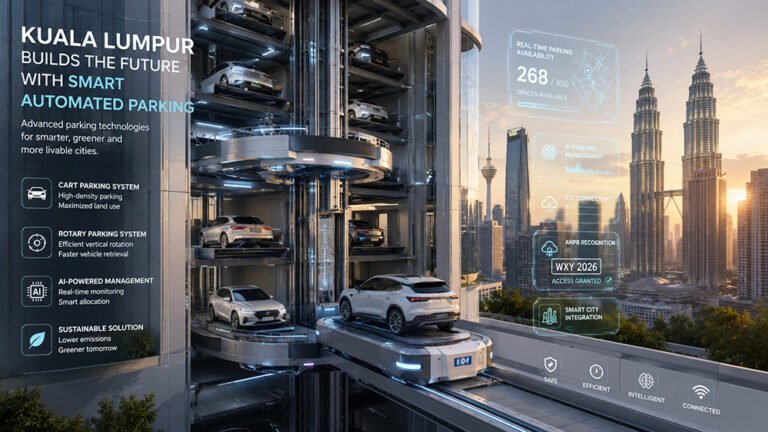
As demand for efficient parking solutions continues to grow, technologies such as Vertical Rotary Parking Systems, Automated Mechanical Parking, Smart Vehicle Retrieval, IoT Monitoring, and Centralized Parking Management are expected to contribute to the development of smarter urban infrastructure.
For companies involved in smart parking technology, projects of this scale demonstrate the possibilities of integrating multiple automated parking units into a coordinated, high-capacity parking facility.
More Parking Spaces. Less Land. Smarter Cities.
Presented by SPS Smart Parking System – Malaysia
News Source: Taizhou Municipal Government, Jiangsu Province, China
Published: 21 March 2025
https://zwfw.taizhou.gov.cn/xwzx/sqdt/art/2025/art_0a447e5908b945f5870135e690bfec31.html